Tuesday, 28 January 2014

Catalogues are here!

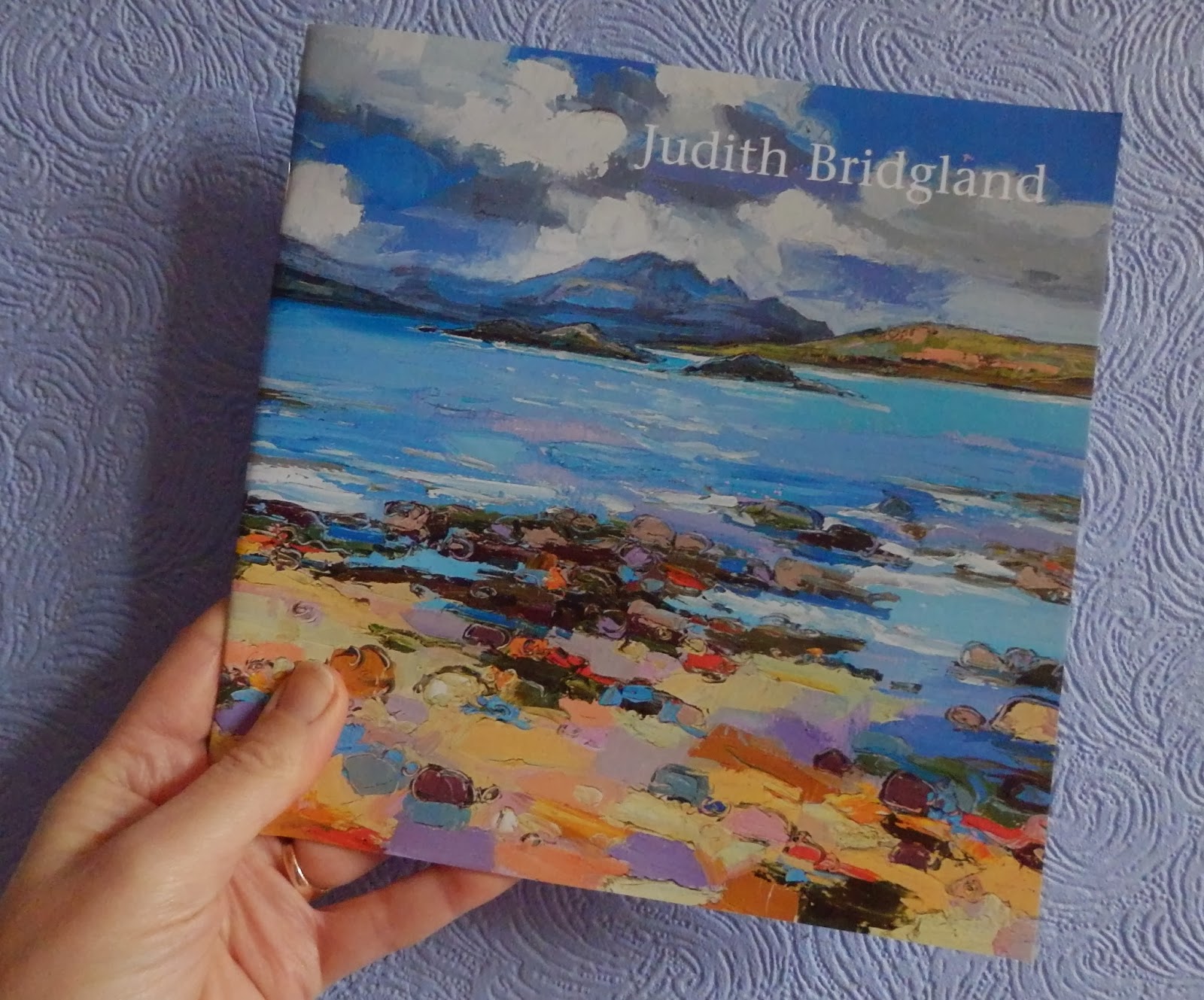
The catalogues for my London solo show "The Call of the Sea" have arrived - opening the boxes is always a very exciting moment!


Here's a peek inside, and you can also have a look at the whole show on the website.  Just click on the link HERE. 


There's my Chalk Figure near Weymouth painting on the left.  It looks really good reproduced in the catalogue I think.


Looks like a few have gone already!

The exhibition runs from 13th February until 11th March, at Duncan Miller Fine Arts, 6 Bury Street, London SW1Y 6AB, with a preview on Wednesday 12th February from 5.30-8pm.  

If you'd like a catalogue, please email me.  

Monday, 27 January 2014

Sea Sculpture

I've at last finished my sea sculpture at art school.


It hasn't turned out anything liike I expected it to at the start, but it was all a process of experimentation, and trying different things, seeing how they looked, and seeing if they worked for the piece.

I had in my mind that the theme was 'the sea'.  I then started by casting a boat-shaped block of herculite, with wire rods embedded into it.  

I then shaped these rods into the two main curcular wave shapes.  Then I put chicken wire over the rods as an armiture.  

Onto this, I wrapped plaster bandage, and coats of herculite to build up the forms, letting it be quite organic in shape.


On the outside of the wave shape, I experimented with various different finishes, throwing pretty much everything I had at the surface and literally seeing what stuck.  I had acrylic paints in yellow ochre, moss green, blue and brown, inks in black, sepia and  a greeny yellow, and a dark teak wax.  I also applied a copper finish and put chemicals on it to turn the surface green.

Inside the crevices of the piece, I put a sticky size with silver leaf on top, which I varnished.

On the inner edge of the wave (or frond of kelp, as it was starting to look more like) I cut thin sheets of copper, bent them to fit, and held them in place with a lip of herculite.

I then cut back the plaster, put an edge of copper acrylic paint on the plaster between the dark outer edge and plain white plaster surface (to look like the effect that you get on large shells such as abalones).  Then it was a layer of shellac over the whole caboodle to bring out the depth of colour.


I'm pretty pleased with how it's turned out, as at one point it looked like something very unpleasant and long-dead that had washed up on the shore, and I thought it was beyond hope.  

However, it's all a case of trying out a whole range of things, seeing what works best with the piece and getting rid of what doesn't - either by covering it up, cutting back the plaster, or getting stuck in with the sandpaper.  The key is not to be precious!  Experiment, and let the object speak to you.
Sunday, 26 January 2014

The Big Melt - How Steel Made Us Hard

Back in the 80s, I used to go and watch strange late-night showings of obscure arty music films, which were often quite trippy, meandering, non-narrative tests of endurance with various weird random images connected by pieces of repetitive, trippy music.  I remember finally being pushed to the limit and having to walk out of a showing of Pink Floyd's Echoes, which had a man surfing a very big wave in slow motion for 23 minutes.

Now, here's a non-narrative film with a musical soundtrack for you, about steel making in Sheffield.  Doesn't sound particularly watchable?  Well, settle down with a pint of Easy Rider for 70 minutes of trippy, strangely compelling archive images of Sheffield's industrial heritage, with a mesmeric soundtrack by Sheffield's own Jarvis Cocker, recorded live at the Crucible.

See a short clip HERE.

BBC/BFI National Archive

Now, I go to Sheffield quite a bit.  I like Sheffield.  It's plain and gritty, it's a city which used to make stuff but doesn't really make stuff any more, and has had the stuffing knocked out of it, but is now beginning to turn itself around and start to be creative again. It's just on the cusp of regeneration.  There's a feeling that you can do things in Sheffield, if only you knuckle down and start doing them and making things again.  Maybe that's why I like Sheffield - because I like the whole challenge and process of knuckling down and making things.  That's exciting.  It feels real.


BBC/BFI National Archive

This film has raided the BFI National Archive, and has taken quirky animated public information films (remember them...?), black and white film of grimy workers flicking two fingers at the camera, plucky tiny-waisted Edwardian girls making bombs, grimy kitchen-sink footage of people in pubs and clubs and dance-halls during their time away from the factories, and blazing technicolour film of the raw brutal process of steel-making in all its fiery intensity.
  
BBC/BFI National Archive


It sounds like the dullest thing on the planet, but it has a strange compelling intensity. 

The drama of the theatrically huge, mechanised steel-making process produces both extraordinary and ordinary objects, from bombs and bridges to cutlery and bolts, which go out across the whole world. In the relentless making of these objects, there's the sense of being at the heart of something bigger than yourselves. 

Away from the factories, there's a tangible sense of ennui and sadness, and of the weariness and plainness of the individual lives of the workers, the human element in the process. It's as if the huge, mechanised steel process also eats up those people's lives.  However, it's a process which simultaneously gives those lives a rhythm and a purpose, and the people, too, are made to be both ordinary and extraordinary through it.

 BBC/BFI National Archive

As I said, it's a non-narrative film, and it's a human necessity to try and make sense of events by creating a story out of seemingly unconnected pieces of information.  But by only having the music to accompany the images, and not a prescriptive narrated voice-over,  you can make up your own story.  It allows the film to become more powerful by being more universal.

By the end, all the disparate fragments of found film become pictorially smelted, to become something greater than the sum of its parts, a huge piece of filmic steel.  It's like a Yorkshire Koyaanisqatsi.

You can read more about the programme HERE.  You can view the programme on BBC i-Player HERE.

Thursday, 23 January 2014

Solo Show Online!

If you'd like to have a sneak preview of my 'The Call of the Sea' solo show at Duncan Miller Fine Arts, just click HERE  to see the paintings in the show.

Rosebay Willowherb at North Berwick (Oil on linen, 32 x 32)

The show opens on Thursday 13th February, and if you'd like a catalogue, drop me a line at judith@jibridgland.com.


Wednesday, 22 January 2014

HEAT!!

Let joy be unconfined - my boiler has at last been fixed!!  

The ice in the studio is finally melting.  

The paintings may actually start drying now.  

It's like Narnia coming out of winter.

In the meantime, here's a look at one of my Eastbourne Pier watercolours.  It's acrylic and pastel on top of one of a screenprint, done in red.  I like that it has a bit of a retro 1950s vibe about it with the colourway.


Summer Clouds, Eastbourne Pier (Mixed Media)

Saturday, 18 January 2014

Paintings at the Fair

Here's some of my paintings which are currently on Stand 51 at the London Art Fair.

Watch out for them if you're there!  They're there until Sunday.

Full Moon over the Embankment (Oil on linen, 12 x 12)


Distant Yacht and Montbretia, Rinagree (Oil on linen, 32 x 32)

                                                             Distant Cuillins from the Beach, Skye (Oil on linen, 26 x 32)


Friday, 17 January 2014

London Art Fair

Here's a few photos from the very busy London Art Fair.

This is a view down on to the main hall, showing the stands on the middle section and the upstairs mezzanine level.


Busy!


Here's the exhibition from the Hepworth Wakefield Gallery, with sculpture by Barbara Hepworth and exhibits from Modern British artists.  (You can read more about the Hepworth Gallery in my blog about my visit there last year HERE.)


The centrepiece of the exhibition is Barbara Hepworth's rosewood sculpture Kneeling Figure from 1932, seen below here.


The exhibition features a selection of exceptional works drawn from the gallery's collection including pieces by Henry Moore, as seen above in the background.  Also included is an example of Hepworth's stunning Hospital Drawings (below) - you can read more about them in my blog HERE.


As you can see, the fair is well worth a visit, and continues until Sunday.  More information here!