Showing posts with label Edvard Munch. Show all posts

Saturday, 20 April 2013

Stamps of Famous Artists

Back in July, I talked about the fleshy paintings of Jenny Savile and Chaim Soutine.

In my blog here I talked about dirt-poor, angry-young-man-about-post-World-War-One-Paris Mr Soutine, and his modus operandi of painting an animal carcass that he'd bought from the slaughterhouse.  His neighbours objected to the long drawn-out painting process when the blood that he was throwing over the carcass in his studio to keep it looking fresh dripped through their ceilings.

Here's Soutine, painting in 1916 by his friend, Modigliani.


Canny American art collector Dr Albert C Barnes bought 52 of Soutine's work in a bargain-basement career-making job lot, paying the penniless artist in cash between $15-30 per painting (depending on which one of Barne's letters you believe).   

Barnes, knowing full well that he was creating a market in an artist, was now sitting on a small fortune, with keen interest from dealers.  Soutine on the other hand, grabbed the money, ran into the street, hailed a taxi, and drove 200 miles to the South of France.

Barnes was a clever businessman and a chemist, and having made his fortune from a highly successful drug formula, was similarly looking for the formula for a successful artist as an investment.  In his letters, Barnes often asked about the constituents of the perfect piece of art, as if art could similarly be reduced to a formula. Obviously he thought he'd found it with Soutine and his eviscerated carcasses.  And it looks like he was right.

In February 2006, an oil painting from this series 'Le Boeuf Écorché' (1924) sold for a record £7.8 million ($13.8 million) at Christies in London.  Now it's available on a stamp.


Perhaps not something you'd like to lick the back of. 

Meanwhile, Norway has issued a series of Edvard Munch 150th anniversary stamps.


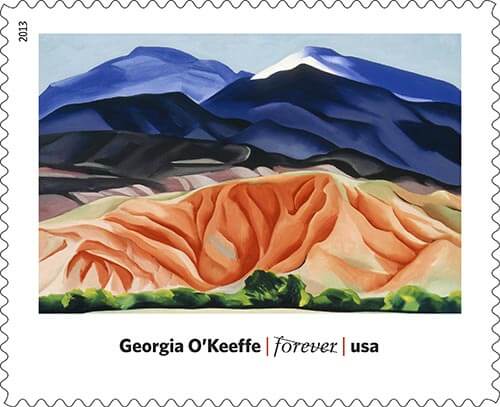
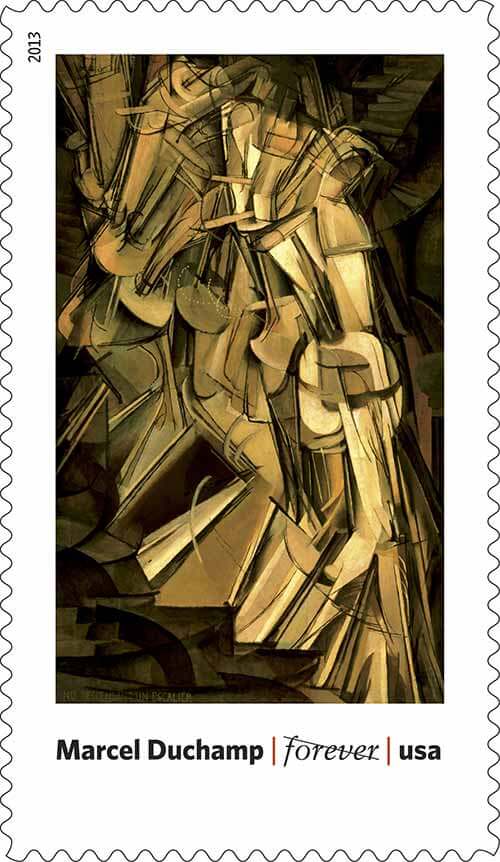
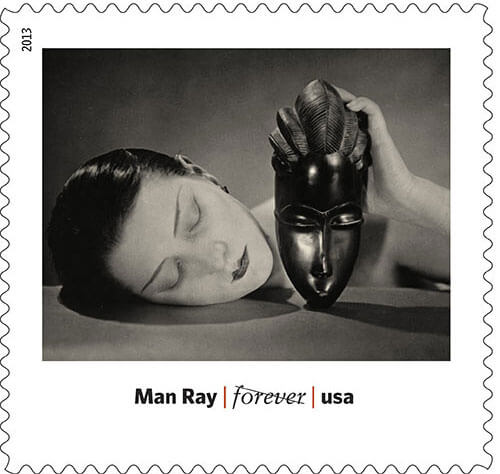
The USA has just issued a series of stamps showing work by Modern Masters.


 Whilst Canada is expressing its deep cultural heritage by putting Rush on its stamps.

So which cultural icon would you put on a stamp?

Monday, 25 February 2013

Favourite Paintings - William Gillies

With the annual RSW show about to open this week, my mind turned to favourite watercolour paintings.

It has to be Scottish painter William Gillies, and his lovely loose, effortless, unassuming handling of the medium.  How gorgeous is this?

William Gillies, Skye Hills from near Morar (Watercolour on paper, 1931)

This is a view of the distinctive Cuillin Hills in Skye from the beach near Morar - somewhere I've painted many times.  Using a restricted palette of greens and blues, here's a patchwork of loose, big-brushed strokes, giving the sense of swiftly-changing light and shade.  It's an emotional response to the scene, which gives you a real sense of place and of being there on the spot.

Here's the man himself.

 William Gillies, Self portrait (Oil on canvas, 1940)

Gillies travelled round the Scottish Highland on painting trips in the 1930s, parking at the side of the road in his trusty little car to record scenes, or pitching his tent as a temporary studio.  Painting quickly, pinning his sheets of paper to a board (you can see the holes made by the drawing pins in the corners of the paper), he could complete quite a few in a day.  Here he is in a joky photograph showing off his collection of on-the-spot work.

 Photograph "The Calidon Show", Durisdeer, September 1933

I guess I like that combination of expressiveness, an emotional attachment to the landscape, an authentic voice recording the scene, but also a voice that it's very understated and quiet.  These aren't paintings that shout.  

They're often quite abstract, with strange colour combinations and quirky, almost child-like elements.  This one, for example, pushes pattern-making to its limits.  It's only after a while that you can make out the shapes of the houses.

William Gillies, Temple (Watercolour on paper, 1958)

Here's another fine example, where you don't immediately see the three very simplified figures in the landscape.
 William Gillies, In Ardnamurchan (Watercolour and gouacheon paper, 1936)

His sister Emma had died the year before this painting, and Gillies said of it,  "There is a fine threat in the landscape."  With family members featuring in this painting, there's every possibility that he saw his own frame of mind reflected in the landscape.  His paintings are of real places and real events, but they're also externalisations of the internal landscape.

Gillies had helped arrange a major Munch exhibition in Edinburgh in 1931 (along with his friend William MacTaggart), and had in turn been much influenced by the moody Expressionism of the Scandinavian artist.  I'm sure you all know The Scream, but here's one of Mr Munch's landscapes.

Edvard Munch, The Red House (Oil on wood, 1930)
 
Gillies himself then travelled to Oslo in 1932.  Scandinavian painting and Scottish painting have much in common, with their love of colour, abstract elements and emotional intensity.

Anyway, if anyone ever wants to buy me a present, then a little Gillies watercolour or drawing will do very nicely, thank you!