Thursday, 23 March 2017

Anderson Rabin and Wakeman, Usher Hall Edinburgh, 22 March 2017

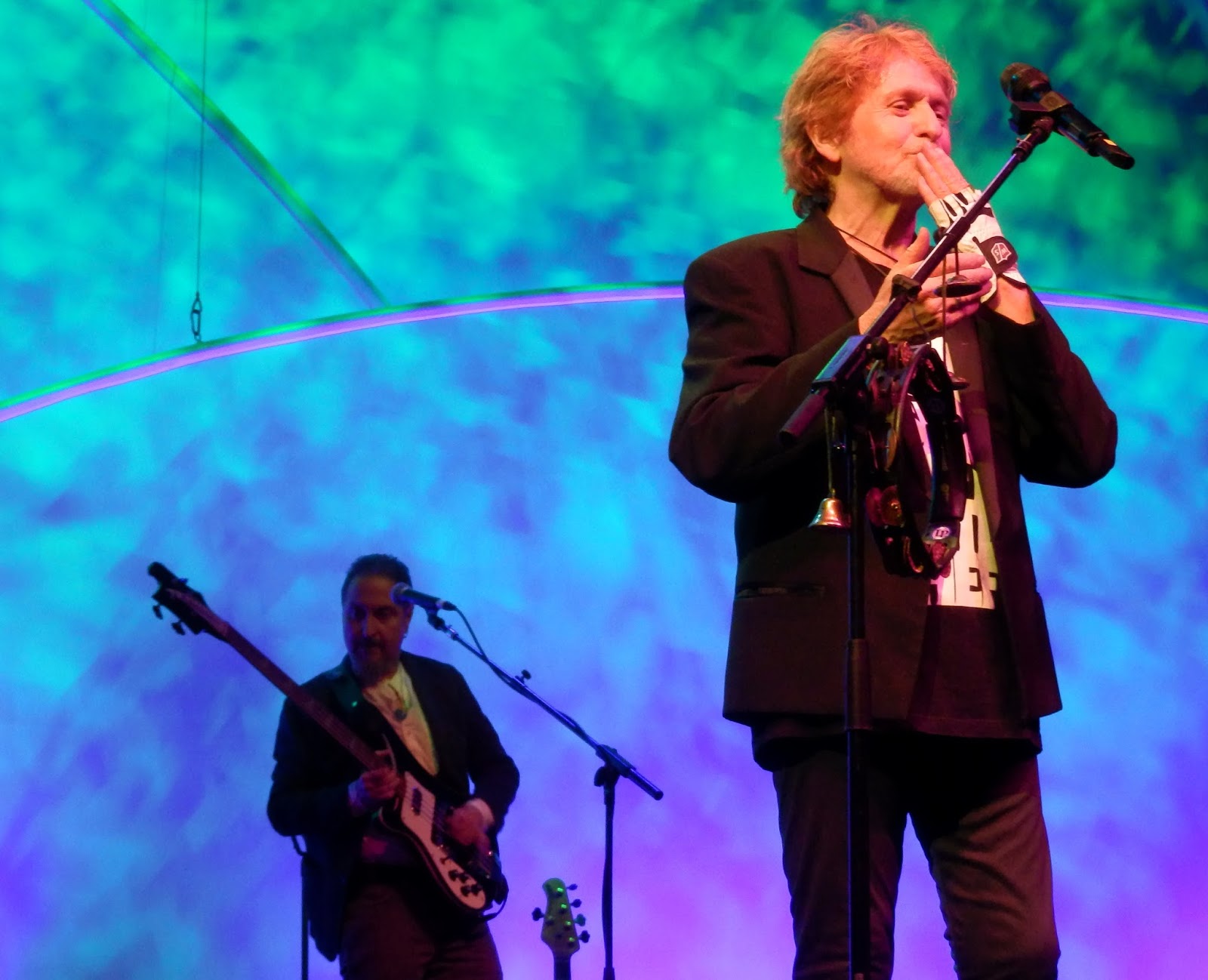
Here's some front row photos from the ARW cheesefest.  Enjoy!

Squeeeeeeeeeeeeeeelll!!!!

Twaaaaaaanggggg!!!

Keytar time.

Bass player Lee 'Not Turned Up As Much As Chris' Pomeroy with Trevor 'Tight-Chinned, Darkish Haired' Rabin.  To be fair, Lee did a great job.
The hugely over-beribboned, sparkly, feathery, bejewelled tambourine kind of sums it all up.

A trim Mr Anderson spots Jaynee in the front row.
Journey to the Centre of the Girth.

Monday, 20 March 2017

Paisley Art Institute Entry

Thought you might like to take a look at the large painting that I've done as this year's entry to the Paisley art Institute.  This is a prestigious annual show in the Art Galleries and Museum in Paisley, which is selected by a panel.

This is an oil and collage piece on linen, called "Driving Rain, the Cuillins".  It's 90cm square.

Here's some close-ups of the collage, which uses tissue paper, paint, paper and hessian.  I like using collage as a way into exploring texture, which I then try to use as a way of informing my mark-making when I am painting purely in oils.


I'll have to wait until the beginning of May before I know if it's been accepted!  Fingers crossed...

Thursday, 16 March 2017

Sussex Modernism

There's a wonderful little exhibition on now at a venue I'd never visited before and didn't even know existed - Two Temple Place in London.

The show is called 'Sussex Modernism, Retreat and Rebellion', and is about the breadth and diversity of artists who lived in the south of England in the first half of last century.  


This of course includes the Bloomsbury group of Duncan Grant, Vanessa Bell and their bohemian friends and family, who were based at Cahrleston Farmhouse, Lee Miller and Roland Penrose at Farley Farmhouse, Eric Gill at Ditchling, and a whole host of other names who seemingly met and worked with everyone else - Henry Moore, Henri Gaudier-Brzeska, Eric Ravilious - the list just goes one.  The quiet seaside towns, gently rolling sheep-covered downs, and sleepy country lanes of comatose Sussex turn out to have been heaving with radical poets, artists, sculptors, composers and (oh yes) economists, in a writhing mass of political, creative and sexual activity, with Cezannes falling out of the hedges.  Who knew?

As well as stunning pieces of work from all of these artists and sculptors, there are sketches by Duncan Grant for Berwick Church - another real favourite of mine - and even Salvador Dali's Mae West Lips Sofa.

This is a thoughtful and expansive exhibition, set in the most jaw-dropping surroundings of Two Temple Place, a cathedral of oppulent oak carvings and stained glass.  In the stairwell between exhibition rooms, there is a wonderfully clever series of pertinent pieces of music and poetry playing, such as Debussy's La Mer which as everyone familiar with Eastbourne will know, was written in Room 200 at the Grand Hotel in 1905. 

(All I can say is, having been to the room, he must have had pretty good eyesight to see the sea from there, but maybe he brought his own binoculars...) 

Please do go along and see the show.  Read more details here.  It's free, and it's on until 23rd April.

Wednesday, 15 February 2017

"Force of Nature" Solo Exhibition in London

A huge thank you to everyone who came along to the preview of my solo exhibition at Duncan R Miller Fine Arts in St James's, London last week.  It was a great evening, and I really appreciate your enthusiasm and kind support.  Hope you all enjoyed the show as well!

If you missed the preview, don't worry - the show is on until 3rd March.  You can view all the work here, and take a stroll round the preview with these photos!

Here's the gallery from the outside in Bury Street.


Here's the first room, with a painting of the Mumbles in the Gower Peninsula in Wales on the left.


In the centre is a little painting of sunflowers which I saw at the roadside in Connecticut.  On the right is the Lizard in Cornwall.


At the top is the Ile de la Cite in Paris from Pont Neuf, and below it is a painting of Hammersmith Bridge.

This large painting is of the Campsies, to the north of Glasgow.


On the left at the top are the Falls of Dochart, below is a painting of the Glenlivet estate.  To the right at the top is Camusdarach on the west coast of Scotland, and below it is the Bass Rock at North Berwick.


On the left, yachts at North Berwick.  Top right, the Gower Peninsula, below is Sea Cliff on the East Coast with the Bass Rock.


This is the second room, with paitnings of Skye, North Berwick, Sandsend near Whitby, and Rhossili Bay in the Gower.


Main picture is of the Cuillins at Sligachan.


Rhossili Bay (left), Aberdeenshire (top) and the Solway Coast (below).


Autumn paintings of Hampstead Heath and the Falls of Dochart at Killin, along with seascapes of Whitby and St Ives.


Lastly, a European selection of paintings of London, Amsterdam and Venice.


Please do go along to the gallery if you get the chance!  The paintings look quite different when you see the real thing.

Tuesday, 7 February 2017

Art of France

Now, if you're a follower of my blog, you may have guessed that anything with Andrew Graham Dixon in it is okay by me.

So please do take a look at his latest series Art of France on BBC Four.  Even if, in episode one, he did rehash his 'church as reliquary ' theory from Treasures of Heaven.

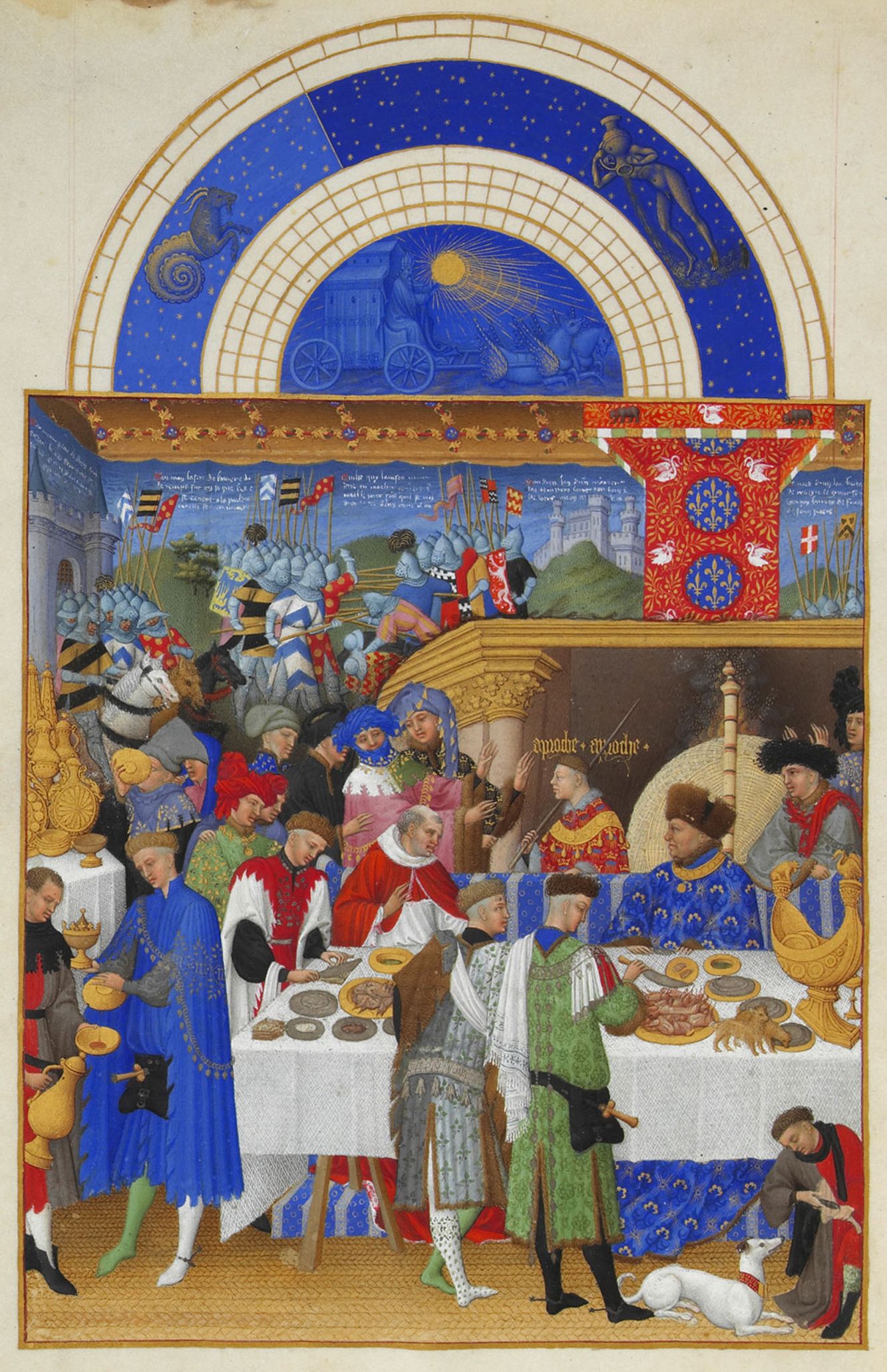
He also got his hands, quite literally,  on Les Tres Riches Heures du Duc de Berry by the Limbourg Brothers.  This was so amazing, I (sadly) actually screamed.  The last time I saw a page of the book was in a slide test during a Fine Art exam, and so it has been seared in my memory ever since.  But I had no idea what size the original was, or how stunningly bright and breathtakingly detailed it is.  And there it was, like an old friend!  And to think Andrew had his ungloved hands on it!!


This series, then, is the story of the most powerful kings ever to rule in Europe with their glittering palaces and astounding art to go in them. AGD reveals how art emerged from a struggle between tradition and revolution, between rulers and a people who didn't always want to be ruled.

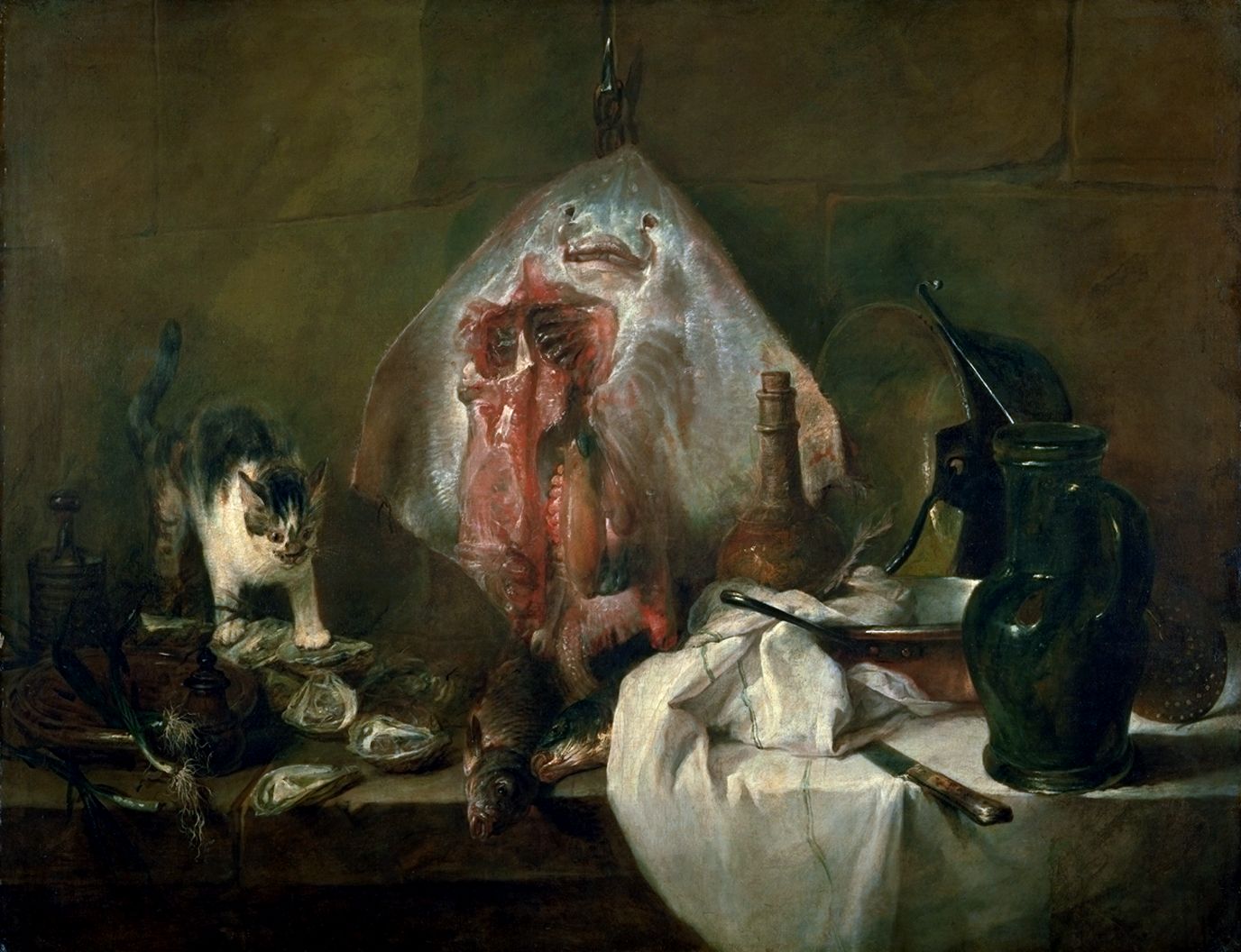
Starting with the first great revolution in art, the invention of Gothic architecture, he traces its development up until the arrival of Classicism and the Age of Enlightenment - and the very eve of the Revolution. Along the way some of the greatest art the world has ever seen was born including the paintings of Poussin (amazing), Watteau (awful) and Chardin (strangely compelling).  Here is Chardin's The Ray, where the cat arches it back, like the cat in Olympia, and the disembowelled body of the fish hangs centre stage, smiling its strange, unsettling,  martyred smile.


It is like the face of the flayed faun in Titian's last painting, The Punishment of Marsyas.


Chardin has managed to create a still life that you actually have empathy and pity for.  And that's something.

AGD also covers the decadent Rococo delights of Boucher and the great history paintings of Charles le Brun - not my favourite period, I have to say, but interesting historically all the same.

You can also see episode 2 There Will be Blood.   

This second episode is an exploration of how art in France took a dramatic turn following the French Revolution that ushered in a bold new world, because of course art is inextricably a reflection of the times in which it is made. 

From the execution of King Louis XVI and the rise of Napoleon Bonaparte - a figure who simultaneously repelled and inspired artists of his time - through to the rise of Romanticism and an art of seduction, sex and high drama.  Artists include Jacques-Louis David - whose art appeared on the barricades and in the streets - as well as the work of Delacroix, Ingres and the tragic but brilliant Theodore Gericault.

Roll on L'Origine du Monde!

Wednesday, 21 December 2016

Facebook

Just in case you're wondering where all the blog posts have gone, I've been over on my Facebook page with photos and updates.

Take a look here to see what I've been up to!

Wednesday, 7 December 2016

Joan Eardley: A Sense of Place

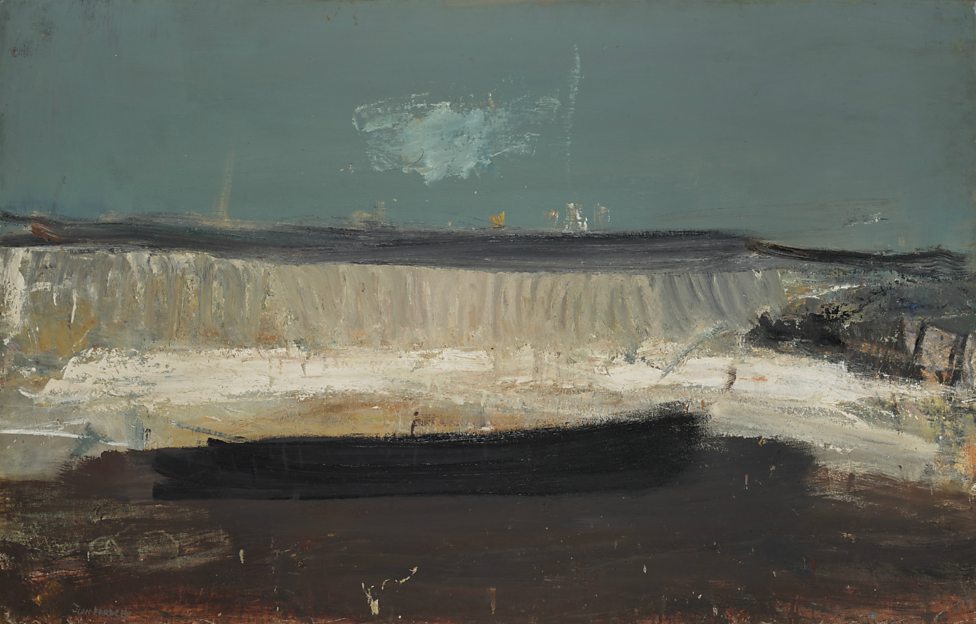
There's a great article on the BBC website about the major new Joan Eardley show that's just opened at the Gallery of Modern Art in Edinburgh.


 The Wave, 1961 © Estate of Joan Eardley

I was at the private view of the show last Thursday (as well as the wonderful celebratory dinner), and it promises to be an important and memorable exhibition - although it was hard to see what was on the walls for the sheer number of folk there!  The show puts a lot of important new material such as letters, maps and preparatory sketches on display in order to contextualise and compliment the work. 

The rooms are arranged so that each takes a theme - Glasgow children, Catterline etc, which helps to focus and clarify the work.  You can visualise and understand exactly where Eardley stood in Catterline order to paint the works. 

Anything which sheds new light on an artists work and brings it to life is a worthwhile exhibition, and anything which helps to cement the reputation of Joan Eardley, one of Scotland's finest ever artists, is to be commended.