Showing posts with label Vivian Maier. Show all posts

Wednesday, 30 May 2018

The Photography of John Turner

There's a wonderful article on the BBC website about the finding of an old suitcase full of photographs, which prove to be a glimpse of the past and an insight into a person.

Read the article here.
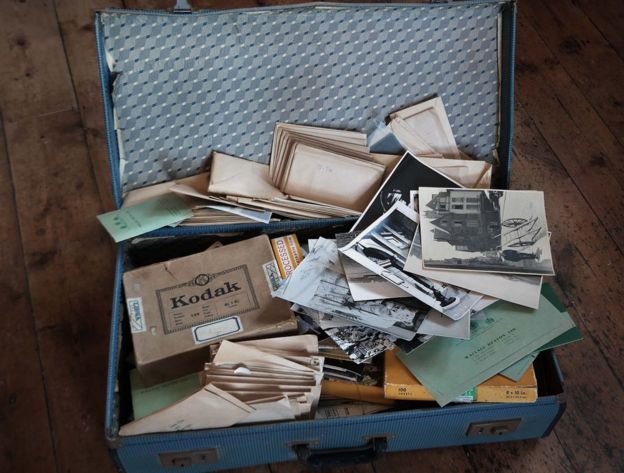

The photos are the work of John Turner, a property manager who died in 1987, and who loved taking photos, but never made a big thing of it to his family.  It was only when he died that his talent was discovered, with images of London from the 1930s to the 50s, and the ordinary people and places of Soho and the street markets.

John seems to have had a need to have a creative outlet - there was a catalogue from the first surrealist exhibition in the 1920s in London in his possessions when he died.  did he long to be a bohemian artist?  Take a look at both the Surrealist overtones and the humour of this shop window scene.
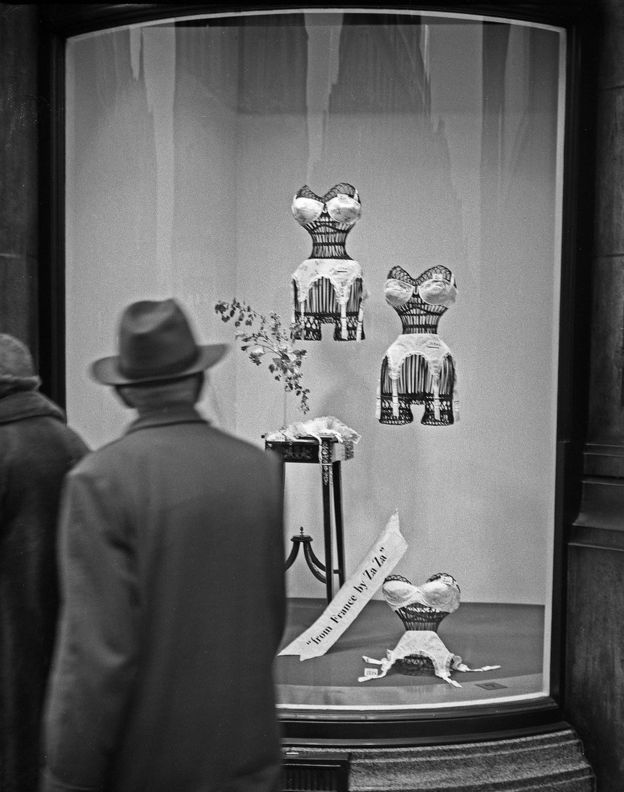
 Bond Street, London, 1960 - John Turner

He certainly has an eye for the quirky and the spontaneuous, getting close to his subjects with his camera, in a way that suggests he was easy-going and non-confrontational, making them feel at ease and allowing them to be natural.  It reminds me very much of the work of ordinary nanny-by-day, photographer-on-her-time-off, Vivian Maier.  
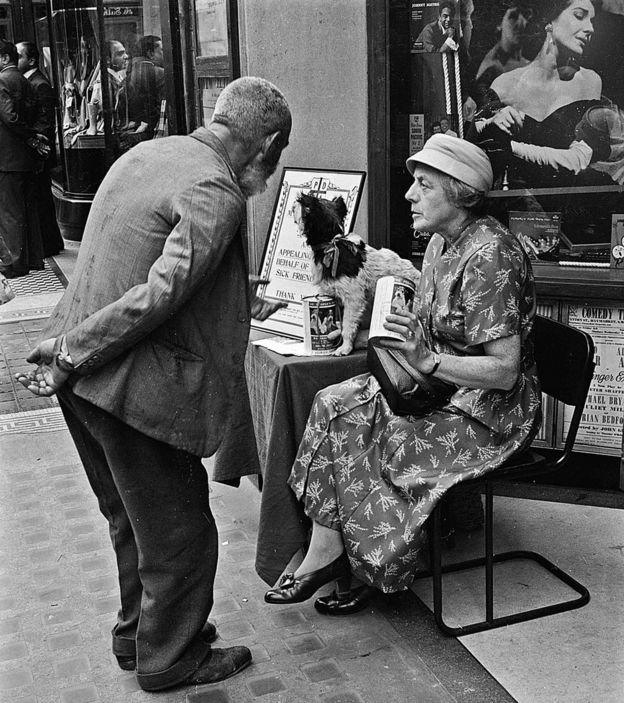
 A woman collecting for the PDSA charity, Regent Street, London, 1955 - John Turner

Apparently he only took one exposure of each subject, so he waited to compose the scene and get it just right, or pressed the trigger at the right moment.  (Maier similarly went out with only one roll of film on each photo expedition, observing and taking one exposure of each subject to tell the story of her journey, until the film was completed, then returning home.)  

Look at how he's managed that capture of the perfect moment here.  Not easy with a cumbersome old camera.
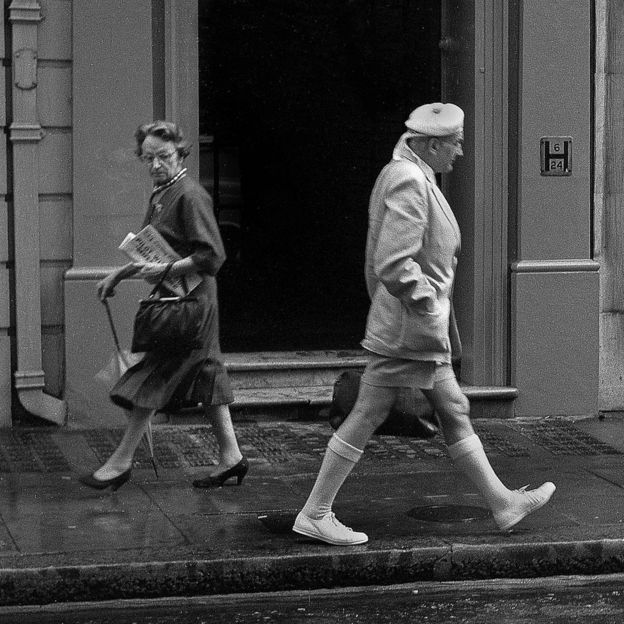

 Passing in the street, London, 1956 - John Turner

Similarly, some of Turner's photos have a certain detatched feel, a voyeur or an observer, although his are more playful than Maiers'. 
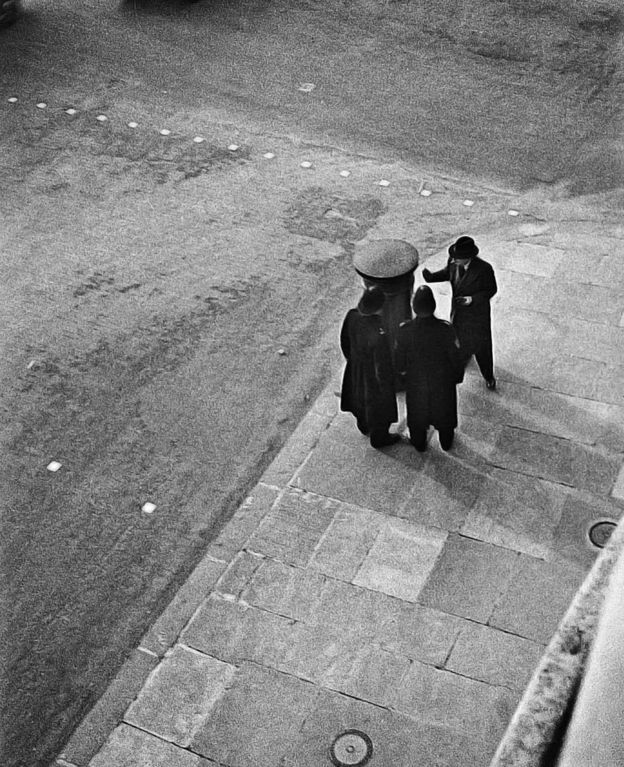
 Policemen seen from above on Charlotte Street, London, 1934 - John Turner

Hers have a certain sadness at the heart of them, his are playful. Hers are, I feel, like a very controlled cry, saying 'I matter, I am here.'  

Both are a way of saying 'there is more to us than people normally see'.

Neither collections were designed to be exhibited.  They were purely private.  A lot of the photos of both Vivian and John were never developed in their lifetime.  There was just a deep personal need to document and create.

Tuesday, 26 September 2017

Philip Larkin's Photography

There was an interesting little programme on the BBC this week (available on i-Player HERE) called Through the Lens of Larkin.


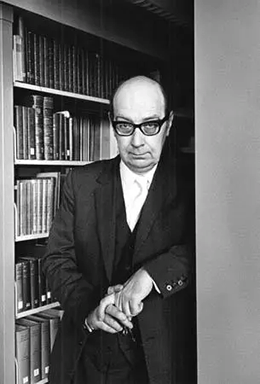
(Photograph by Fay Godwin, 1970)

Philip Larkin, the Hull librarian, was, of course, most famous for his poetry (although I've never really connected with them myself, finding the rather predatory Larkin creepiness just too pervasive).  Whilst the five thousand photographs that he took - of everyday life, his female friends, and self-portraits taken with his Rolleiflex 10 second timer - were often very good, they were variable.  Sometimes they were just those of a holiday snapper.  Whilst there were flashes of insights, he certainly didn't have the genius in this medium of say, fellow amateur photographer Vivian Maier (compare her work HERE).  

Like Maier, Larkin's photos were found after his death, and weren't shown or exhibited.  For both, it was a pursuit to please themselves, unbound by any sort of conventions.  

Maier's working method was to take a trip to a rough part of Chicago (where she worked as a nanny) with her camera and a single roll of film, and take a whole film as a record of her journey.  Each frame is a masterpiece, often taken at very close quarters to subjects.  Hers is a female gaze.  She is the outsider looking on to other people's worlds, but they don't find her threatening or confrontational. She is bearing witness to their lives, and to her own through her self-portraits. For her, you get the sense that it is a kind of obsessional therapy, repeating the feeling that although she is within the world, she is detached, and that to take a photo is to reinvent herself.

Larkin's methodology is quite different in approach.  It is clearly a male gaze, and often about attachment, setting up coquettish photos of women who look down the lens at him. There are parades of women, and you are invited to think of the relationship between these women and Larkin.  What does the sum of all these parades of women gazing down the lens at Larkin say about him?  

The programme even meets Larkin's secretary and lover (how handy) Betty Mackereth, who was the subject of one of his most beautiful and ambiguous love poems, Morning At Last: There In The Snow.  She describes how, after many years together in a perfectly normal hum-drum office situation, he suddenly made his move on her.  Yikes.

However, it was still an interesting programme, especially as, most importantly of all, Larkin's photographs interact with his best output, his poetry.

View a clip of the programme HERE.