Wednesday, 19 June 2013

Good News at Hampstead!

It seems that my Hampstead and London paintings went down a treat at the Affordable Art Fair at Hampstead over the weekend, which is great news!


Apparently the damp weather didn't dampen the enthusiasm of the art buyers, leading to plenty of sales.  Hurrah!

And according to this article in the Telegraph, people in the 18 to 34 year bracket are turning to art as a form of investment, with nearly a third of those in this age bracket having purchased paintings, sculptures of photographs worth under £4000 apiece (the ceiling price for the Affordable Art Fairs) in the last 12 months.

The Fair has moved from its October/November slot of the last two years to this year's summer slot of June.  It was a bit of an unknown quantity, but it seems that this move has been to the benefit of the Fair, moving it away from clashing with the Affordable Art Fair at Battersea in October, and creating an event which is more in keeping with the numbers of summer visitors to the Heath.  The result has been an event going like...well, a fair!

It's going to be a June date for 2014, so put it in your diaries and see you all there!

Monday, 17 June 2013

Shipbuilding on the Clyde at the Maclaurin Open Fine Art Exhibition

I was over in Ayr at the weekend to see my paintings which are currently on show in the Maclaurin Open Fine Art Exhibition.

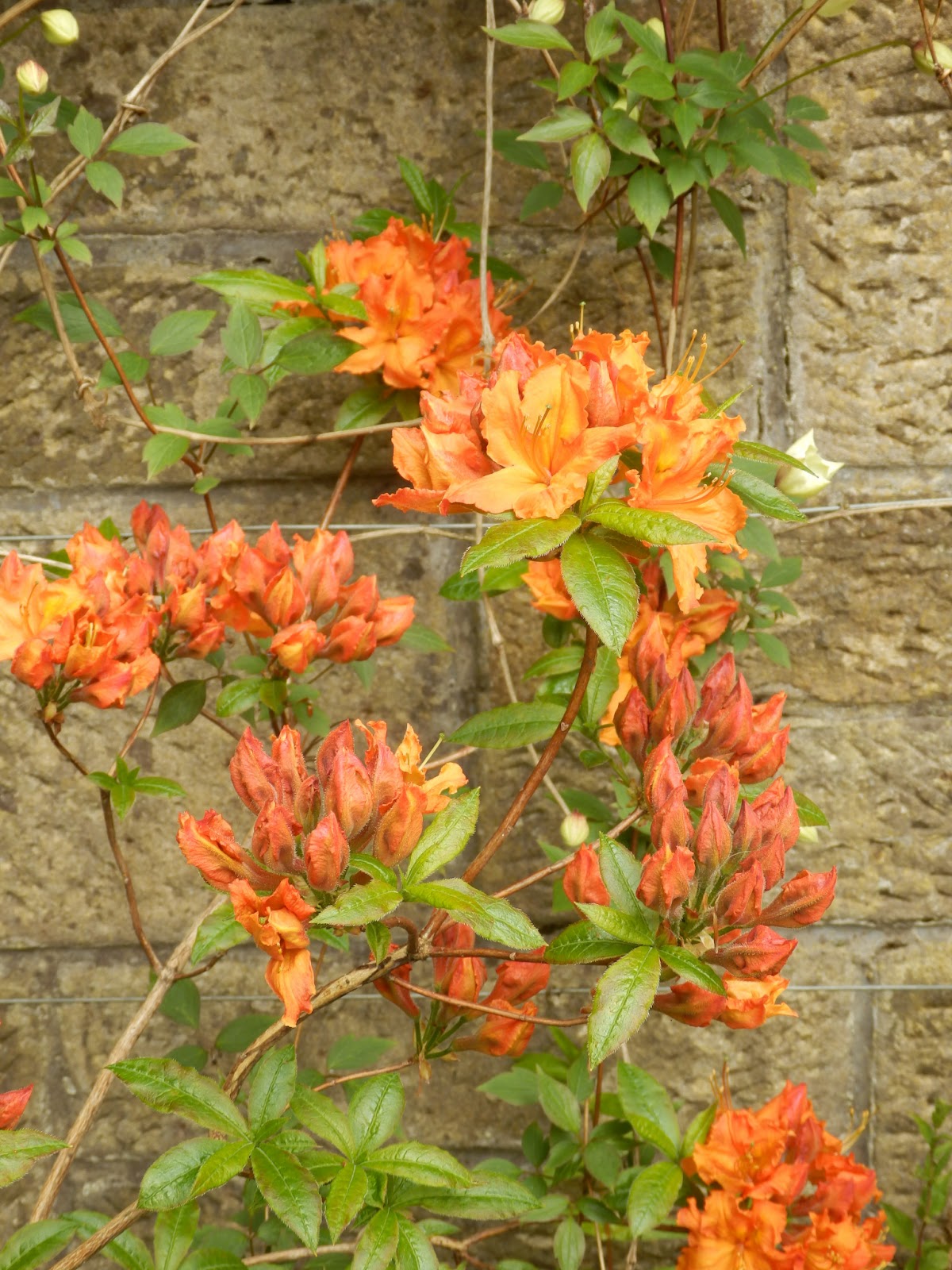
Rozelle House, where the exhibition is hosted, is set in the middle of a fine park, which at this time of year is full of lovely rhododendrons and azaleas in full bloom.

It's a really good show, selected from entries from all over Scotland.  Here's my painting, and I was really pleased to see that it's in 'pride of place', with a really good position on the end wall, so you see it as soon as you go in.


The painting is "Shipbuilding on the Clyde", and was taken from a viewpoint at the back of my friend Matt's house.


The ship featured is of special significance, as it is the Type 45 Destroyer HMS Duncan, built at BAE Systems, Govan, and the last to be built and launched down the slipway on the Clyde.  So it's a pretty special ship, and rather sad.

Photograph: Murdo Macleod

Read an article about the launch here. 

I remember being taken to see the launch of the QE2 on the Clyde in 1967.  I wasn't entirely clear what was going on, but I'd never seen such a vast crowd of people.

Photo: Paul Strathdee

If you'd like to read about the launch or anything else about the QE2, one of the truly great Clyde-built ships, then there's a whole load of really interesting information and photos (including ones of her at present in Dubai) on my friend Rob's website The QE2 Story.

You can see my painting in the Maclaurin exhibition until the 7th of July.

Saturday, 15 June 2013

Art on Hampstead Heath

I gather things are a little English-summer-damp at Hampstead at the moment, but all the more reason to get into a big tent and look at a little quality art.


The Affordable Art Fair is on today on the heath in its big white tents on the Lower Fairground, finishing tomorrow.  It's a fair that's all about young and emerging artists, hence the 'affordable' price-tag.

I'd love to be there today and see how my work is going down!  I've got my fingers crossed for my paintings of the autumn trees on Hampstead Heath.  I really like them and I hope someone at the fair will too....

Paths Meeting, Hampstead Heath


Friday, 14 June 2013

Neil Young in Glasgow

Last night I saw Canadian rocker Neil Young and his band Crazy Horse in Glasgow.  Of course, it's not the first time Mr Young has played Glasgow. 


Back in the 70s, a Glasgow film crew tailed Young as he arrived in Glasgow for a concert, looking for some funky footage.  They captured the moment that Neil sat down outside the Gordon Street entrance of Central Station and started playing The Old Laughing Lady.

Click here for video of Neil Young busking in Glasgow, 1976


The film is hugely nostalgic not only because it captures a Glasgow I remember, but a Glasgow you find you've forgotten.  It looks unbelievably far back in the past - grimy, old-fashioned (not least because it's in black and white), full of socialist newspaper headlines, women in headscarves, slick-haired businessmen, flatcapped workers, thin long-haired teenagers and very bad glasses.  

People don't immediately recognise or appreciate Neil Young at all, sitting right there down on the pavement on the street corner (except for one young woman who sits beside him like an acolyte).  So it's a strangely meaningful little bit of film, working on a number of levels.

But last night, a rather older Mr Young and his band were at the huge aircraft-hangar-sized hall of the SECC, where everyone knew very well who he was and had paid a lot of money to be there.  Age has not wearied his voice - never the most melodic of instruments, it is nevertheless fresh as a daisy, as vulnerably fragile, emotive and expressive as it ever was.  

However, what differenciated this concert from the usual slickly-timed, ultra-staged performances-in-a-soulless-shed of megabands such as Rush (whom I saw at the same venue last month) is that this felt strangely intimate, even spontaneous  (although I was in the cheap standing section down at the front - the view from the seated area away at the back must have been very poor in comparison).

Walk Like A Giant lasted 20 minutes, with guitars roaring.  At times the set was so storming and inventive, it felt like what it must have been like tripping at Woodstock (in fact the Woodstock Festival logo was on a banner at the back of the stage at one point).  Neil was strumming the guitar, hitting it, blowing it, coaxing, chastising it to get the notes out. 

At one point he even stuck his hand through the giant amp to twiddle on some knobs to get some even more mind-grinding acoustic distortion on the cosmic soundscape.  Combined with snatched, fragments of screened images of the band in their younger days, it was as if he was altering the actual time/space continuum with his guitar.

 photo by Leticia Nischang

At times during the set, it was like listening to the later parts of Yes's The Gates of Delirium in all its apocalyptic visceral crunching and grinding. 

As for stage effects, at one point newspapers and old plastic bags blew and swirled around the stage. A bit like the entrance to Central Station in 1976.

There was certainly a wide cross-section of audience members down at the front rocking out - the guy in front of me had brought his mum and his gran, and a creche of urchins jumped around at the side - some of whom were probably not even born at the beginning of the set.

In contrast, in the middle of the show, came a simple acoustic guitar and harmonica section with the beautiful Heart of Gold ("and I'm gettin' old" sang the 67-year-old ironically named Mr Young, poignantly)


and Blowin' in the Wind.  Then it all kicked off again, raging into Powderfinger, Cinnamnon Girl and Hey, Hey, My, My. 

When you go to a concert, you don't want to feel that you are part of some huge sausage factory experience, consuming a soullessly repeated show that will be the the same tomorrow night to another audience.  You want to feel some sort of a connection to the person on stage, and however naively, you want to feel that they are connecting to you. 

In an age of stadium venue concerts, Neil Young and Crazy Horse was a surprisingly intimate and life-affirming show.


Wednesday, 5 June 2013

Paintings Rhododendrons

Sometimes I think I've got a very strange job, and this thought was certainly crossing my mind as I was crawling through the undergrowth of Pollok Estate this morning in the sunshine.

My mission was to photograph the beautiful azaleas, magnolias and rhododendrons that grow there, with a view to (of course) painting them.


These flowers come to you courtesy of Sir John Stirling Maxwell, one of the founders of the National Trust for Scotland, and owner of the Pollok Estate in the south of Glasgow, which he left to the people of Glasgow because of his belief in the importance of green open spaces in a city.  

It's now home to the Burrell Collection, Pollok House, a herd of Highland Cattle and many magnificent acres of woodland, all right on my doorstep.


Tuesday, 4 June 2013

Hampstead Paintings Go To London

My new Hampstead Heath paintings have just arrived in London, in time for the Affordable Art Fair starting there on the 13th of June.

I have a whole range of paintings of the trees on the heath in the autumn sunshine, from this large one which I've shown you before...

Paths Meeting, Hampstead Heath (Oil on linen, 32 x 48)

...to these smaller ones...

Edge of the Wood, Hampstead Heath (Oil, on linen 12 x 12)

Into the Woods, Hampstead Heath (Oil on linen, 12 x 12)

Spreading Branches, Hampstead Heath (Oil on linen, 12 x 12)

Path Through Autumn Trees, Hampstead Heath (Oil on linen, 12 x 12)

...and the study for the big painting....

Paths Meeting, Hampstead Heath (Oil on linen, 12 x 12)

The Affordable Art Fair at Hampstead was in November last year, but this year it's been moved to 13-16th June, and it will also be in June next year.  

Very excited to see how my paintings are received at the location where they were painted!  If you manage to get along to the Affordable Art Fair Hampstead, then you can see my paintings (and other new work of London) on the Duncan R Miller Fine Arts stand.

If you're interested in any of the paintings that you see here, then they're at the gallery at the moment, so please contact  Duncan Miller Fine Arts and they'll be pleased to help. 

If you do go to the fair, let me know what you think!


Monday, 3 June 2013

And the Answer Is...

Well, hardly any point in saying, since it was guessed in about three minutes flat!

However, for those of you who didn't get it, the artist who drew this....

 ...is also the artist who drew this...

...and who painted this...
   

L.S. Lowry, Coming from the Mill, 1930 / © The Lowry Collection, Salford

Yes, it's Mr Matchstalk-Men-and-Matchstalk-Cats-and-Dogs himself, L S Lowry.

(cover image of L. S. Lowry: A Biography by Shelley Rohde)

There's a new exhibition opening in Salford called 'Unseen Lowry', which displays over 100 previously unseen drawings, sketches and paintings by the artist.  It opens on 22 June, and is meant to show facets of the artist's character and painting style that have been previously overlooked.  There is also to be a major London exhibition at Tate Britain.

Lowry is of course characterised as the simple man who painted honest, hardworking people in a naive style.  However, his style developed from his art school training in formal Edwardian methods, as shown in the portrait head of the woman at the top of the blog, to a more naive style.  It then later developed, claims the BBC article here, to become more obsessional and sexualised - more Matchstalk-Girls-In-Matchstalk-Corsets-and-High-Heels.

L S Lowry: Girl in Bows in a Formal Interior

(I guess talking up the 'sexualised' content of your art show won't harm visitor numbers.)
  
Lowry himself was a man full of contradictions, a mischevious person who liked to obfuscate and misdirect, and generally tinker with the truth for his own amusement.  (It doesn't sound like there was much amusement in his life, though.)

Born in 1887 in Stretford, it was a difficult birth.  Lowry was the only son, and his mother never took to him, it seems, but he was desperate to please her.  She later ruled his life when she took to her bed, devastated by the change in family fortunes which meant they had to move down the social scale from leafy Victoria Park to grimy Pendlebury.  However, it was the making of him artistically.

In 1905 he began evening classes in antique and freehand drawing at the Manchester Academy of Fine Art and at Salford Royal Technical College. Records show him still attending classes in the 1920s. He studied under the French Impressionist Valette - here's one of Valette's pictures, painted at the same time that Lowry was studying.

 Pierre Adolphe Valette, Albert Square, Manchester (Oil on canvas, 1910)
 See any parallels?
L S Lowry View of a Town (Oil on canvas, 1936)

Lowry worked as a rent collector (something he didn't like to boast about), and observed the life in the streets and factories as he moved around the city doing his job.  He made on-the-spot sketches and drawings on scraps of paper, and then at home he worked up the paintings, using a white ground which he had left to go a creamy colour.  This made for the stark, industrial effect that he was after.  When he holidayed alone, he would sit in the corner of the dining room in hotels, sketching other diners and their families on the back of old envelopes, serviettes or tickets (such sketches are now worth thousands).

His pallette was very limited.  "I am a simple man" he said, "and I use simple materials: ivory, black, vermilion, Prussian blue, yellow ochre, flake white and no medium (e.g. linseed oil)."

So that's these colours..

 Vermilion


 Prussian Blue


Yellow Ochre

plus a creamy off-white, a white and black.

"That's all I've ever used in my paintings." said Lowry,  "I like oils... I like a medium you can work into over a period of time".  He not only used both ends of his paintbrush in the work, scratching into the paint surface, or scoring it with sticks or nails, but he also used his fingers to apply the paint.

In 1932, his father died, and Lowry was at the beck and call of his bedbound mother.  He could only paint when she was asleep.  He was depressed and isolated.

She died in 1939 just as Lowry had his first London exhibition and began to be successful - although it is often said that he also derided for being just a 'Sunday' or hobby painter.  However, Salford Museum & Art Gallery had begun collecting the artist's work in 1936, work which now forms the core of its collection in the building which today bears the artist's name and celebrates his art.  Lowry also became an official war artist in 1943, was awarded an honorary Master of Arts degree from the University of Manchester in 1945, and in 1953 he was appointed Official Artist at the Coronation.

By the 1950s, he was quite famous, and grew tired and irritated by people approaching him or visiting his house. There is a story that he kept a suitcase by the front door so that he could pretend that he was just leaving for the station, should someone call. He lived alone in a house was filled with clocks set at different times, and was secretive and mischevious, telling tall stories and anecdotes.  

He presented himself as a 'simple man', but owned works by Dante Gabriel Rosetti, and was up to date with all the latest in contemporary art (though he didn't understand Francis Bacon). He was alone, and seems to have been shy and have had difficulty with social interaction, but also had many friends, some of whom he was close to and supportive of all his life.  He was called a 'Sunday painter', but had a professional passion for his work, and was lauded and recognised in his lifetime; a man who wanted to present himself as open and  'simple', but who was complex and quite dark and repressed.  

He was full of contradictions, with as many layers as his paintings sometimes contained.

L S Lowry, The Man with Red Eyes (OIl on canvas, 1938)

He retired from rent collecting in 1952, and died of pneumonia aged 88 in 1976.  He had been heaped with honours and recognition, and now has a huge arts centre dedicated to his work.


In June, both the Lowry and Tate Britain will add to the list of recognition with their major exhibitions, no doubt to huge public interest.

READ MY OTHER POST ABOUT LOWRY,  LOWRY ON THE RADIO.